Why Hiring a Professional Landscape Designer Saves You Money in the Long Run
Credentials, construction experience, and a proven portfolio are not extras. They are what protect your investment.
A beautiful landscape is one of the most visible investments you can make in a property. It is also one of the easiest to get wrong. When homeowners choose experience over price alone, they are not paying for a luxury. They are protecting themselves from the far greater cost of fixing mistakes.
Professional landscape designers bring more than taste. They bring training in grading, drainage, soil science, horticulture, and construction sequencing. A plan that looks simple on paper often depends on technical decisions made long before the first plant goes in the ground. Getting those decisions right the first time is what saves money.
Accreditation matters. A designer with formal education and recognized credentials has been trained to think in systems, not just surfaces. They understand how water moves across a site, how root zones interact with utilities, and how materials perform under freeze-thaw cycles. That knowledge prevents the failures that show up two or three years later as soggy lawns, cracked paving, or dead trees.
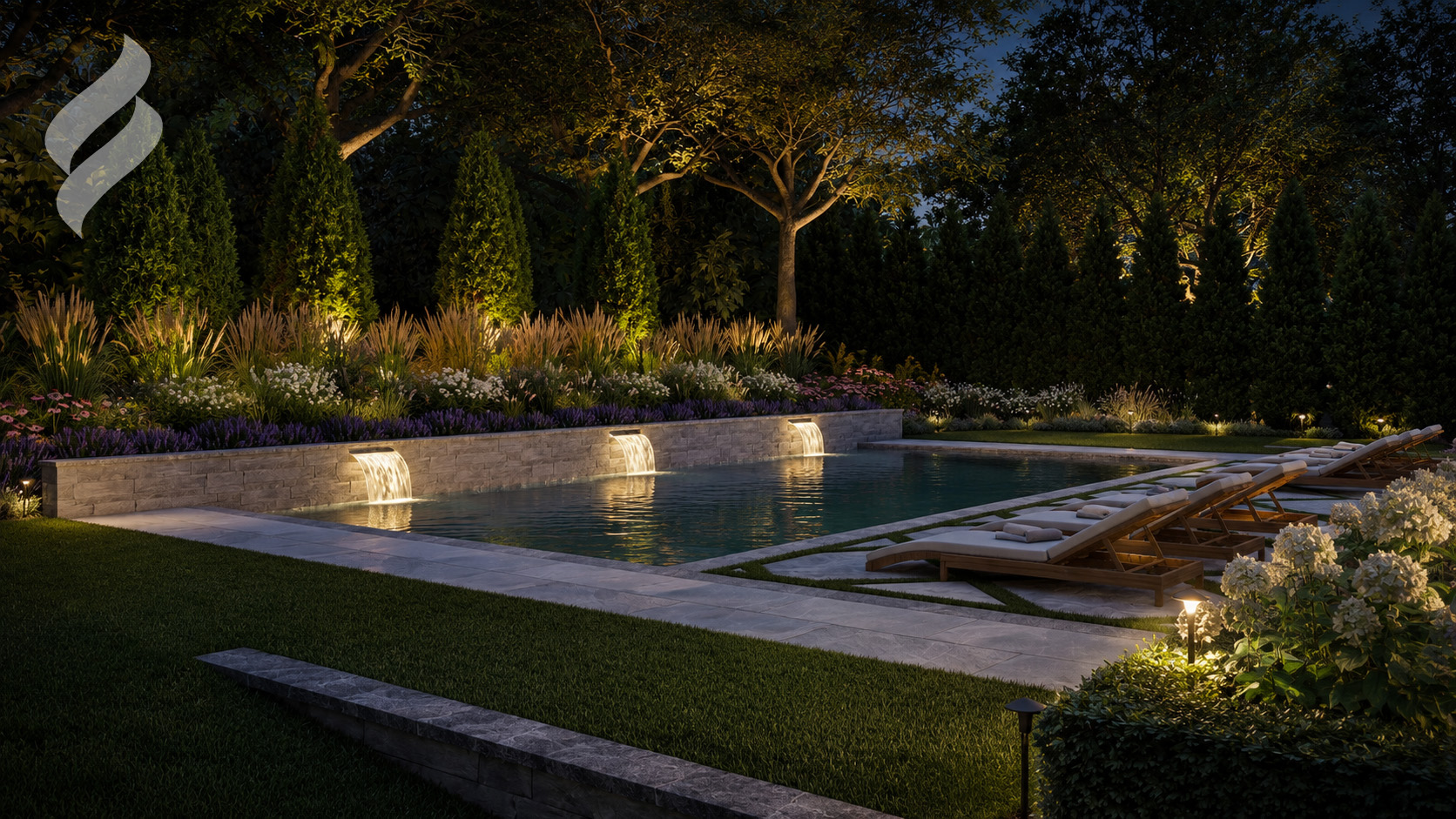
A portfolio is proof. Every completed project tells a story about how a designer solves problems in the field. Before hiring anyone, ask to see work that has been built, not just drawn. Renderings can be persuasive, but photographs of real gardens, real terraces, and real construction details reveal whether a designer can translate an idea into something that lasts.
Construction experience is not optional. Landscape design and landscape installation are deeply connected. A designer who has spent time around crews, materials, and job sites knows what is buildable, what is durable, and where shortcuts are likely to fail. They can read a set of plans the way a builder does, and they can communicate with contractors in a language that keeps the work on track.
The cheapest bid is rarely the least expensive path. Low bids often rely on undersized materials, skipped drainage, or plants placed where they cannot thrive. When those choices fail, the replacement costs multiply. A professional designer specifies the right details from the start and helps you understand where to invest and where to hold back.
Good design also protects the value of your home. A well-designed landscape improves curb appeal, extends usable living space, and creates the kind of first impression that supports resale value. A poorly designed one does the opposite. It can make a fine home feel awkward, unfinished, or out of place on its own land.
Maintenance is another place where experience pays off. A designer who understands plant growth, spacing, and seasonal care can select a palette that matures gracefully without becoming a burden. The right plant in the right place needs less pruning, less irrigation, and less replacement. Over the years, that adds up to significant savings.
Perhaps most importantly, a professional designer acts as your advocate. They coordinate with architects, builders, irrigation specialists, and masons so that the landscape is not an afterthought. When every trade understands the plan, the project moves more smoothly, mistakes are caught early, and the final result feels intentional rather than patched together.
Hiring a professional landscape designer is a decision about value, not cost. The right partner brings credentials, a strong portfolio, and real construction knowledge to your project. Those qualifications are what turn a good idea into a landscape that endures, and they are what save you money long after the installation is complete.